Upper Marlboro Epoxy Flooring Company
#1 Epoxy Flooring in Upper Marlboro, MD
Upper Marlboro Epoxy Flooring: Epoxy Flooring, Epoxy Countertops, and Commercial & Industrial Epoxy Flooring
#1 Epoxy Flooring in Upper Marlboro, MD
Upper Marlboro Epoxy Flooring: Epoxy Flooring, Epoxy Countertops, and Commercial & Industrial Epoxy Flooring
Upper Marlboro Epoxy Flooring Company installs epoxy flooring, epoxy countertops, and commercial and industrial epoxy flooring across Upper Marlboro, Maryland, and the surrounding Prince George's County communities we serve every week. We are licensed and bonded, we bring 30 years of combined experience to every slab, we are veteran friendly, financing is available, and we work under MHIC 155221.
We work in a town with deep roots and a small town footprint. Upper Marlboro was settled around 1695 and established in 1706 as a port town for tobacco shipments on the Western Branch of the Patuxent River, and it has served as the county seat of Prince George's County since 1721. The town proper counts 652 residents and about 335 dwelling units, mostly single family homes, while Greater Upper Marlboro spreads across farms, estates, and newer subdivisions well beyond Main Street.
Our local climate shapes every recommendation we make. Upper Marlboro carries a humid subtropical climate with hot humid summers and generally mild to cool winters, and ground moisture moves through slabs here in ways owners rarely expect. We grind, repair, and moisture test every floor before we coat it, because honest preparation is what keeps a glossy finish bonded season after season.
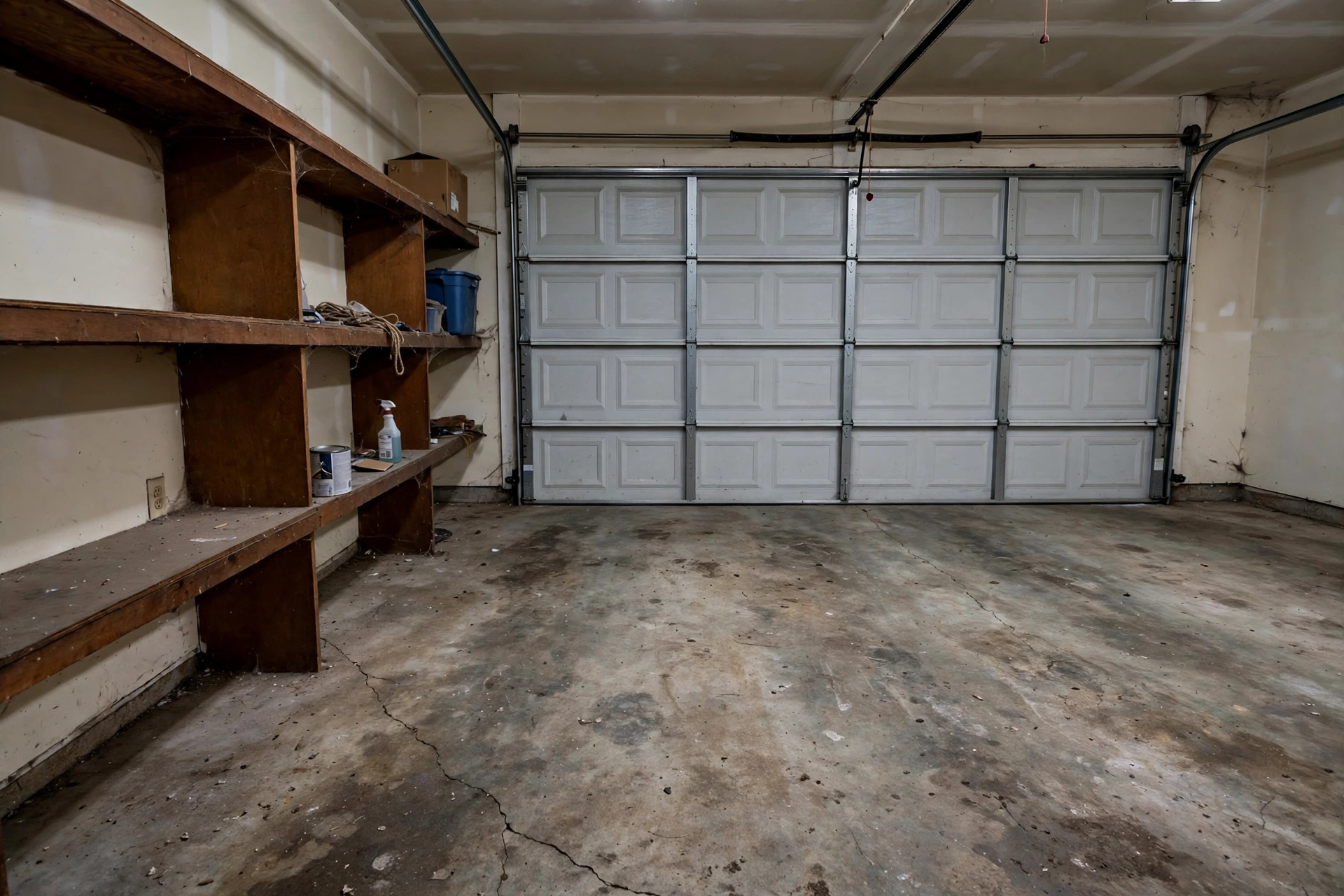
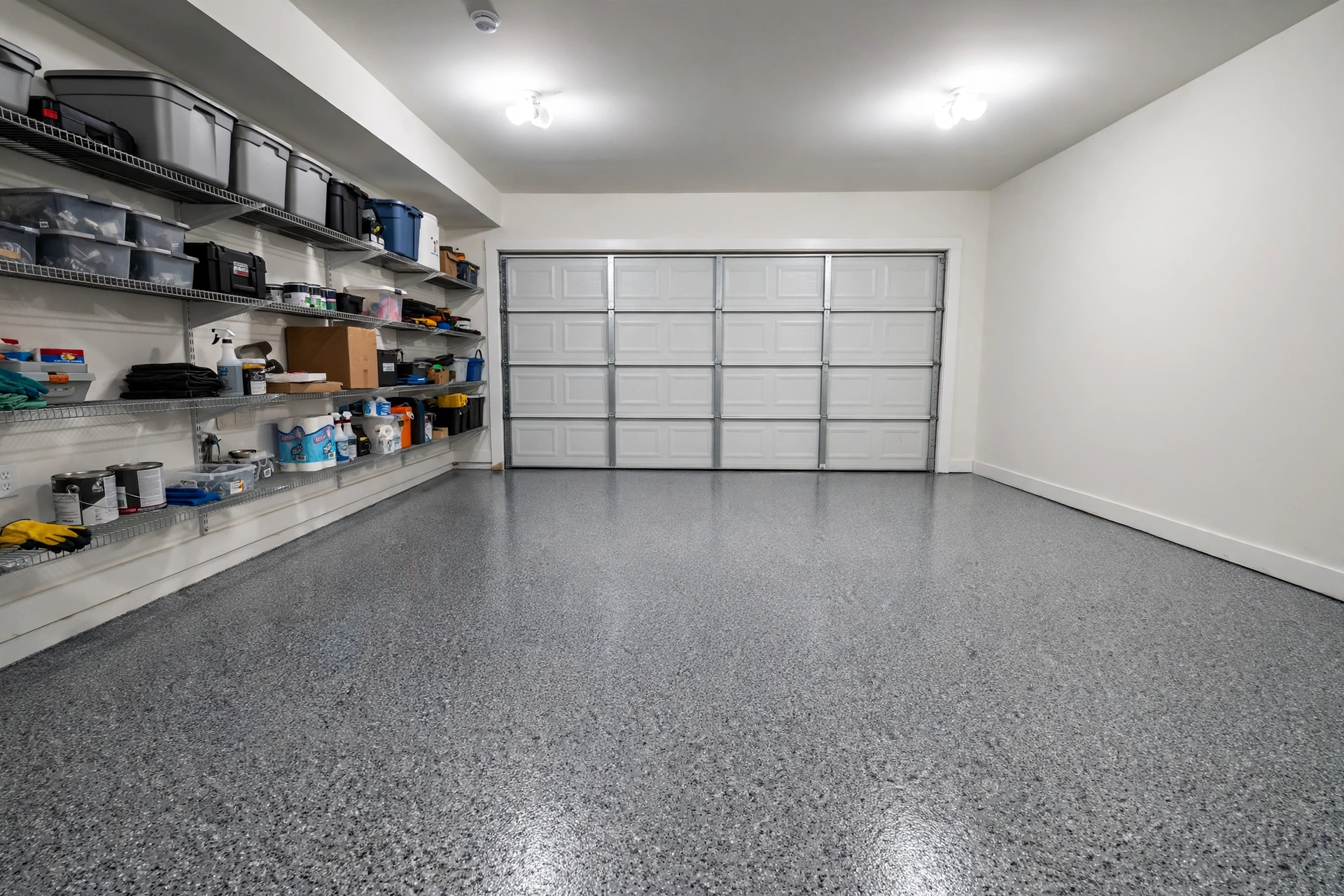
In March 2026 we finished a full flake garage floor in Kettering. Work included grinding the slab open, filling settled cracks, testing moisture, laying the epoxy base, broadcasting flake to full coverage, and sealing the floor with a clear topcoat. The homeowner now hoses winter salt and farm mud off a sealed surface instead of watching both stain raw concrete.
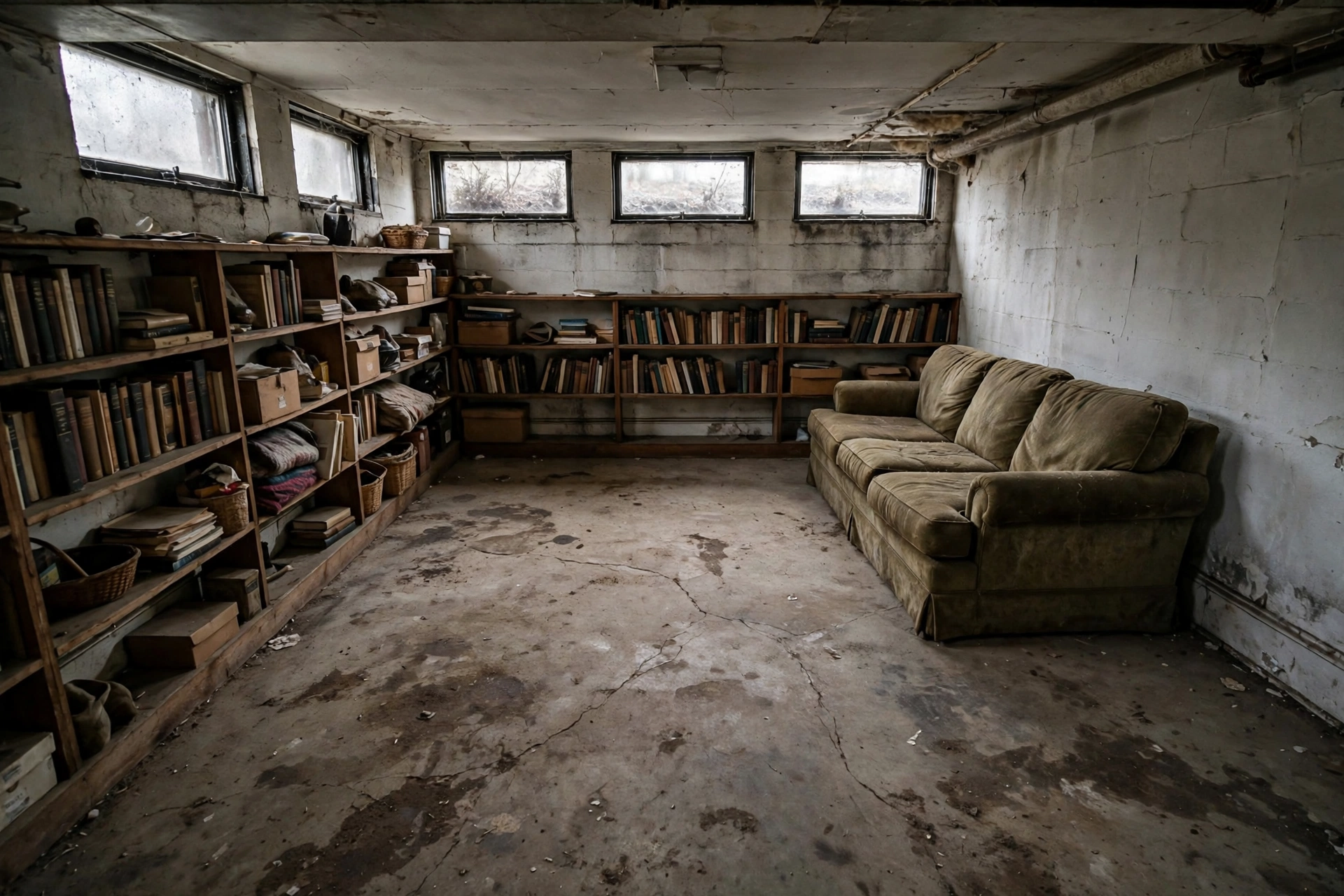
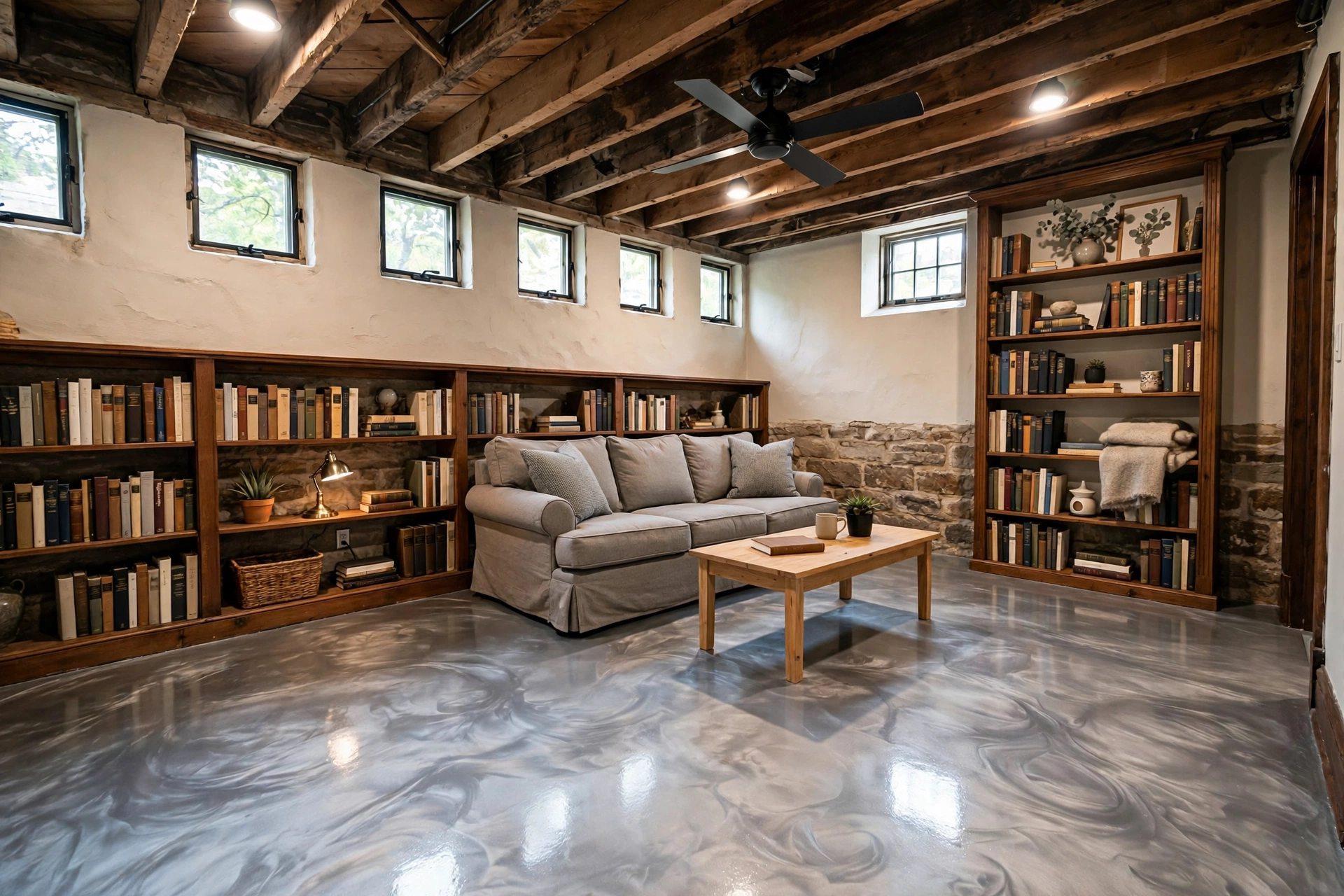
In November 2025 we poured a metallic basement floor near Main Street. The job ran from grinding and moisture readings through a mitigation primer, a tinted base, and a hand guided metallic layer sealed under a satin topcoat, all planned around a new family room. The owner gained finished living space below the house where dusty storage boxes once sat.
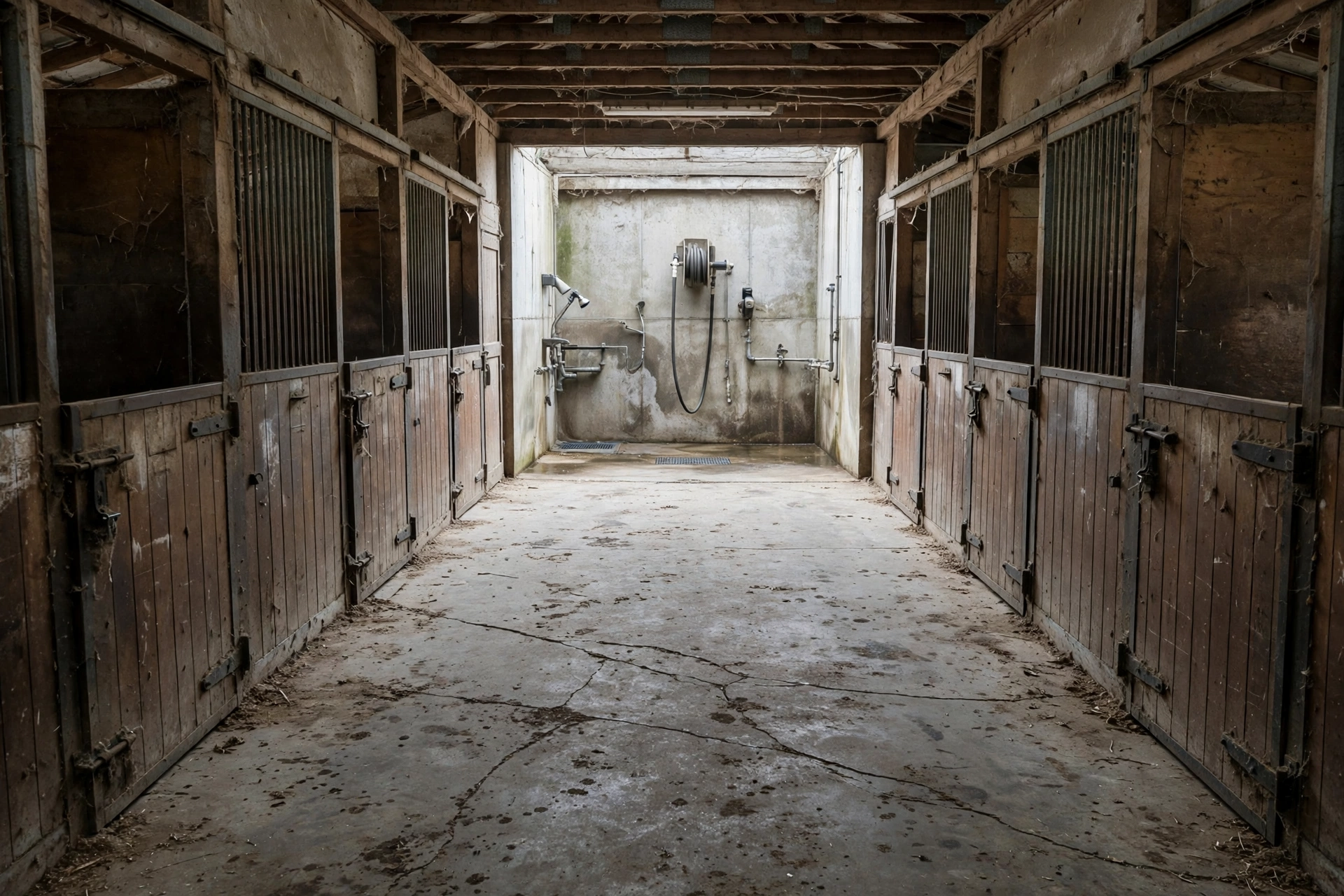
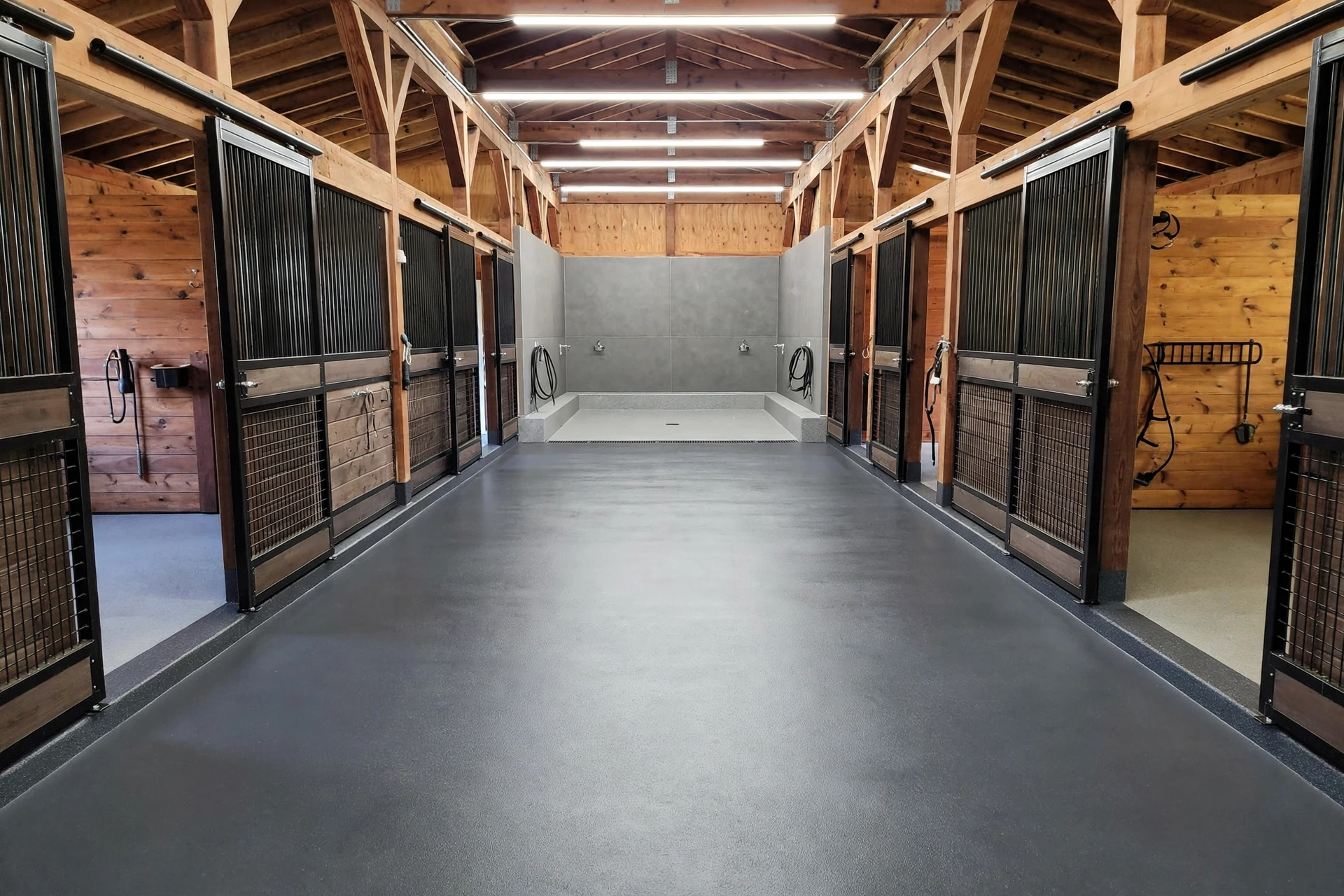
In September 2025 we coated a barn aisle and wash bay floor on a horse property off Old Marlboro Pike. The scope covered grinding, crack repair, a heavy duty epoxy build with slip resistant texture, and cove base along the wash bay walls, phased so the barn kept operating. From the owner perspective, the win was an aisle that hoses down fast after daily stable work and stays steady underfoot when wet.
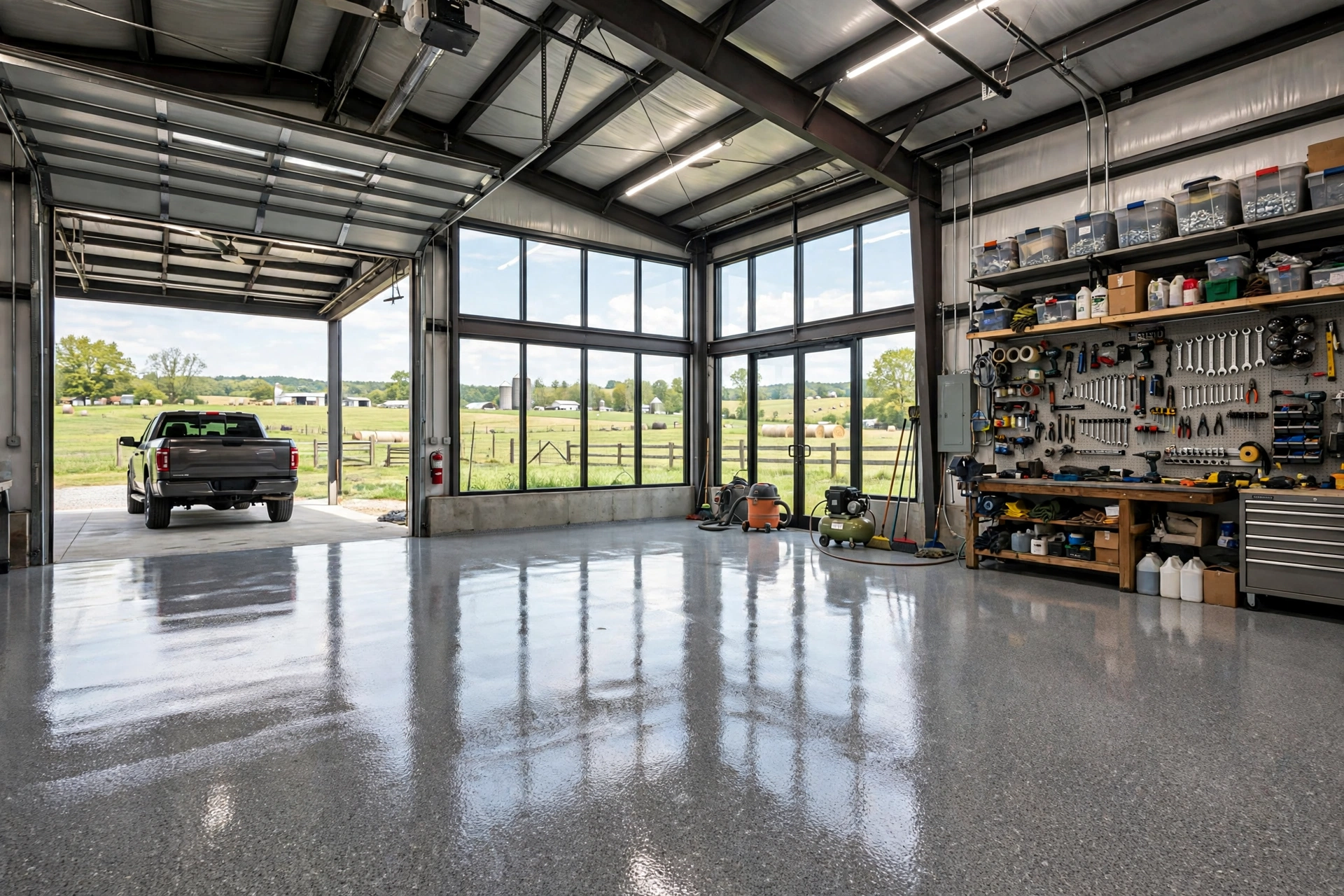
We start most garage projects here, where rural lanes and winter weather send mud, gravel dust, and road salt in on tires all season long. Many garages on Upper Marlboro properties double as workshops or equipment storage, so the floor takes real daily use from trucks, trailers, and tools.
We diamond grind the slab, repair cracks, and take moisture readings before any coating goes down. Then we build a high build epoxy system with a durable topcoat that shrugs off oil drips and hot tire marks and sweeps clean in minutes, whether the space is a two car garage in Kettering or an oversized shop on a farm property.
We coat basements that range from older cellars in farmhouses to full poured lower levels in newer builds, and many sit unfinished because the concrete feels cold, dusty, and damp. Epoxy seals the slab, holds down the dust, and gives a family a finished surface for a rec room, a home office, a gym, or guest space.
Moisture guides our plan on every lower level job. Ground near the Western Branch and School House Pond can push vapor up through older slabs that were poured without a vapor barrier, so we test before we coat, and where the numbers run high we add a moisture mitigation primer before any color coat touches the slab.
Metallic epoxy turns a floor into the design feature of the room. As we work the coating, metallic pigments swirl and settle through the clear binder, building rivers of color and depth that feel closer to polished marble than to paint, all in one seamless surface.
Local picks for metallic include finished basements, entertainment rooms, basement bars, and the entryways and pool houses on estate properties, anywhere a plain floor would undersell the room. A gloss or satin topcoat guards the artwork below from chair legs, foot traffic, and daily life.
For a flake finish, we scatter vinyl color chips across wet epoxy until the surface reads like speckled granite, full of texture and grip. That busy pattern forgives a lot, hiding small slab flaws and the dust and dirt a working garage collects, which is why local homeowners request it for garages more than any other finish.
Color blends range from quiet grays to warm mixes touched with tan or blue, and we lay samples in your own light so the choice fits your cabinets and vehicles. The raised texture also helps footing when rain and mud ride in on tires and boots, and the clear topcoat seals the whole pattern down.
Our countertop work pours fresh epoxy over a sound existing counter or a new base, forming one seamless surface with stone like depth and hand shaped veining. Farmhouse kitchens get a full refresh this way, newer kitchens gain a custom centerpiece, and basement bars gain a rich finish, all without tearing out the old counters or hauling in heavy stone slabs.
Because every pour is shaped by hand, no two counters share the same colors or veining. We seal each one with a topcoat rated for daily kitchen duty and leave the owner with simple care steps that keep the surface looking rich.
Quartz floors come together in layers, with colored quartz granules broadcast into the epoxy again and again until the surface turns thick and heavily textured. That texture brings natural grip, and the build stands among the toughest finishes we offer for homes.
At home, quartz earns its keep in mudrooms where boots land after barn chores, in laundry rooms, around pools, and at garage entries that catch weather all year. It keeps footing on wet days and trades grout scrubbing for a quick pass with a mop.
When a slab has pitted, spalled, or settled out of level, we rebuild it with a resurfacing overlay that restores a smooth sound surface, ready to receive a coating or to serve as the finish on its own. Plenty of older rural slabs around town need exactly this rescue before epoxy enters the picture.
Repairs include chasing out cracks and filling them, patching spalled patches flush, and treating each joint the way that slab demands. Local winters cycle through freeze and thaw and local summers bring heavy rain, and solid repair work stops that weather record from printing through the finished floor.
Warehouse floors here carry forklifts, pallet jacks, stacked pallets, and farm equipment through long weeks, so we build them deep and tough. After full grinding and repair we lay a thick epoxy body and a hard wearing topcoat, and we can stripe walkways and safety lanes right into the finish while cutting the concrete dust that once settled over stored goods.
A working kitchen needs a floor with no seams for grease to hide in and real grip under wet shoes. We build that floor with textured quartz or flake and cove base at the walls, then schedule the work in sections or during closed hours so local restaurants and caterers keep their doors open.
Industrial floors get specced around the actual chemicals, heat, and loads inside that building, never from a generic template. The toughest bays receive reinforced builds, wall lines get sealed with cove base, and we always walk the facility first so the resin system matches the work that happens on that concrete.
In a showroom the floor sets the tone before a single product gets a look. Our metallic and flake finishes throw light back into the room, read as high end under display lighting, shrug off daily foot traffic, and wipe clean fast when the doors close for the night.
We coat homes across the full range of Upper Marlboro housing, from historic houses near the downtown courthouse district and older farmhouses along the rural roads to newer subdivisions toward Kettering and Mitchellville and estate properties with barns and paddocks. Businesses here run from the shops, restaurants, and professional offices along Main Street and Pennsylvania Avenue to equestrian facilities, farm supply operations, warehouses, and service companies along the Route 301 and Route 4 corridors. Trust in a small county seat town travels by word of mouth, so we guard it on every job: we show owners the moisture readings, explain why one system fits their slab better than another, and put the full scope in writing before any work begins.
We begin with a visit to the property, where we walk the space with the owner, measure every section, study the slab surface, and note cracks, joints, old coatings, and moisture readings across the floor. Those findings shape a written quote that spells out the system, the scope of prep, and the working schedule in full.
When work starts, we mask and protect the area, grind the concrete, complete repairs, and then apply primer, base, decorative or functional layers, and topcoat in sequence. We are licensed and bonded, we hold MHIC 155221, and our 30 years of combined experience guide each of those steps on every project.
Our systems start with high solids professional resins that cure at full thickness instead of shrinking down like the thin kits sold in big box stores. A standard build layers a penetrating primer for bond, a thick base coat for body and color, and a topcoat picked for the traffic and chemicals that floor will face.
For floors that face strong sun, heavy abrasion, or a tight return to service window, we top the build with polyaspartic or polyurethane for added stability and wear protection. Because we are veteran friendly and financing is available, owners can pick the build their slab truly needs rather than cutting the system to fit the lowest price.
A typical garage or basement here takes two to three days of work at the property, followed by cure time before vehicles park on it again. Estate garages, barn floors, and commercial jobs take longer or run in phases, and the written quote carries the day by day plan for the whole job.
That schedule states when you can walk the floor, when belongings can move back, and when vehicles or horses can return to the space. Because summer humidity runs high in this river valley town, we pick coating windows with care and finish with a full walkthrough on cure times and upkeep before we leave.
Every floor prices a little differently, because size, slab condition, prep needs, and system choice all pull on the final number. The ranges below describe the premium professional work we install here, and your written quote after a site visit pins down the exact figure for your floor.
Solid color epoxy runs $4 to $7 per square foot installed, full flake runs $5 to $9 per square foot installed, and metallic runs $8 to $14 per square foot installed. Where a slab needs moisture mitigation or an extra topcoat, the price moves inside that band, so we quote only after we have measured the floor and read its moisture in person.
Two car garages typically run $2,800 to $5,500, and three car garages typically run $4,500 to $8,500. Garage pricing shifts with prep work more than with size alone, since a slab that needs crack chasing, oil cleanup, or removal of a failed earlier coating takes longer to ready, while a clean slab in good shape keeps the job near the bottom of the range.
Basement epoxy floors typically run $3,000 to $7,500. Finished living areas with metallic designs land near the top of that band, while plain utility coatings land near the bottom, and older slabs near the river often add a moisture mitigation step to the scope.
Commercial epoxy floors typically run $6 to $12 per square foot installed. Wide open warehouse floors with easy access land near the bottom of that band, while kitchens, wash areas, and industrial bays that call for quartz texture, cove base, or work in phases during closed hours land near the top.
From our Upper Marlboro base we work across the historic downtown along Main Street, the quiet residential streets west of downtown, and the estates, farms, and horse properties along the rural roads outside town. Beyond the town line we serve Largo, Bowie, Mitchellville, Kettering, Clinton, Brandywine, Rosaryville, Croom, Forestville, Camp Springs, Fort Washington, and Oxon Hill.
We also coat garages, basements, barns, and commercial floors throughout Greater Upper Marlboro and the wider southern Prince George's County countryside. If your community sits near Upper Marlboro and is not named here, ask us anyway and we will answer plainly about whether we can serve the project well.
If stained, dusty, or worn concrete is the first thing you see at home or at work, we can change that picture. We will come out, study the slab, explain your options in plain terms, and leave you a clear written quote to consider in your own time.
Start with a simple conversation about your floor. Expect a straight answer on what the concrete needs, what the work involves, and how long it will take, with no pressure to decide on the spot.
Per square foot, solid color runs $4 to $7 installed, full flake runs $5 to $9, and metallic runs $8 to $14. Most two car garages fall between $2,800 to $5,500, and most commercial floors fall between $6 to $12 per square foot, with the exact figure set after we visit, measure, and test the slab.
Plan on two to three days of work at the property for a typical garage or basement, plus cure time before cars park on the new surface again. Day one goes to grinding and repairs, coating follows layer by layer, and a slab with heavy cracking or high moisture may need an extra day. Your written quote spells out the full schedule before we begin.
Lifespan depends on how the floor was prepared, how thick the system was built, and how hard the space gets used each week. A ground and moisture tested slab with a full professional build will outlast a thin coating on unprepared concrete by years. Simple habits help as well, like sweeping grit often and wiping spills before they sit.
A smooth surface can feel slick when wet, so grip gets planned into the build rather than added as an afterthought. Flake and quartz layers bring texture underfoot, and we can blend grip additives into the topcoat for garages, entries, kitchens, and barn wash areas. We set the texture level around how each room is actually used.
Yes, in most cases, and older concrete is common across Upper Marlboro farmhouses and estate outbuildings. We grind first, then chase and fill cracks, patch spalls, and read moisture across the slab, adding mitigation primer where the numbers demand it. When we find structural movement that repair cannot settle, we say so plainly before any coating work is quoted.
Care is light. Sweep or dust mop on a regular rhythm so grit never grinds into the topcoat, mop with mild cleaner and water when the floor needs more, and wipe oil, chemical, and road salt residue soon after it lands, especially in winter. Skip harsh solvents and scouring pads, and barn aisles benefit from a hose down and squeegee after wash days.
Send the form and describe the floor you are picturing. We answer every Upper Marlboro request personally, then schedule a visit to measure the slab, test it for moisture, and choose the system that fits the building and the budget.
Prefer to talk it through first? Send the form and we will call you back at the number you give us.